

Space. the first frontier.
In the process of finding out what to post on Field Notes, I found myself wanting to focus on two topics that have been on my mind as I prepare for the future of my coffee shop. Building a wildly beautiful coffeeshop that has a welcoming atmosphere and also creating a place where employees want to work and be a part of something bigger. So when that comes to mind, this space is not the final frontier but rather the first frontier. What I mean by this is that first impressions can make or break a space’s environment and can shape the people that come around it. I want to focus on the first aspect of building a space from the ground up and making it a place where it is inviting for people who are coming in.
Let’s set the stage for how we make a space that is both intentional and that meets expectations. It starts at the door, the threshold if you will, before you pass the threshold you are met with the decision on do I go in or should I run back home to my 2 cats and my comfort snacks. In under 5 seconds this can make or break anyone’s perspective on whether they want to come in or not. Is the outside clean, does the sign have missing letters, and is that dark roast coffee I smell or someone smoking on the sign of the building. Regardless of the answer, we know that these first five seconds can be the deciding factor for many guests. So take pride in the appearance, the upkeep and even the smell you have coming in and around your shop.
Next is lighting, and this is a big one for me. Does your shop have bright florescent lights or does it have some sunlight coming in from the windows that provides a sense of one with nature even when it is 100 degrees outside. I know that when I walk into a coffee shop and the lights are dim, it makes me a little sleepy, which is another reason you need coffee. On the contrary when it is bright outside and the warm sun shines through I feel a sense of calm and at ease with the space. Ambient light is also very important because it adds a glow to the atmosphere, and can make dim spaces feel alive in a room. I know that with Emperia, I would also love to have dimmable lights so it doesn’t feel like its daytime when its 8pm in the afternoon.
Another major thing that I love to talk about with my friends (mostly my husband) is the layout and flow of a space. I have always dreamed of a venue where the central focus is the interaction between customer and barista. To achieve this, I imagine placing the bar in the middle of the room so the baristas have a visible, active presence and a sense of ownership that helps to foster both craft and conversation. A sort of stage where they can share ideas about coffee and express their passion for the science behind it. All around this central hub I want a feeling of togetherness, with tables and booths oriented inward so people naturally face one another and conversations can evolve comfortably for hours at a time. I also want the lighting, acoustics, and materials to support that intimacy, warm, focused light over the bar, soft surfaces to keep noise down, and durable, tactile finishes that invite touch. The result should be a space that feels alive but welcoming, where every visit encourages connection: a place to learn, linger, and savor both the coffee and the company.
What else can make a break a space is the sense of belonging. It starts with a welcome that is genuine and doesn’t feel scripted. It sets the tone for the way you will take in the rest of the atmosphere. It’s an acknowledgment that you are here and that you are wanted here. Over time, this acknowledgement can grow into a sense of recognition between the barista and the customer and for that to happen, the customer must have the impression that they want to come back. Remembering a name or a usual order is how great relationships start and how genuine conversations are built. The returning game is a long one because belonging is built on consistency over time. Every oversight erodes it and that leads me into my last section. Showing up for your employees so that your employees show up for you.
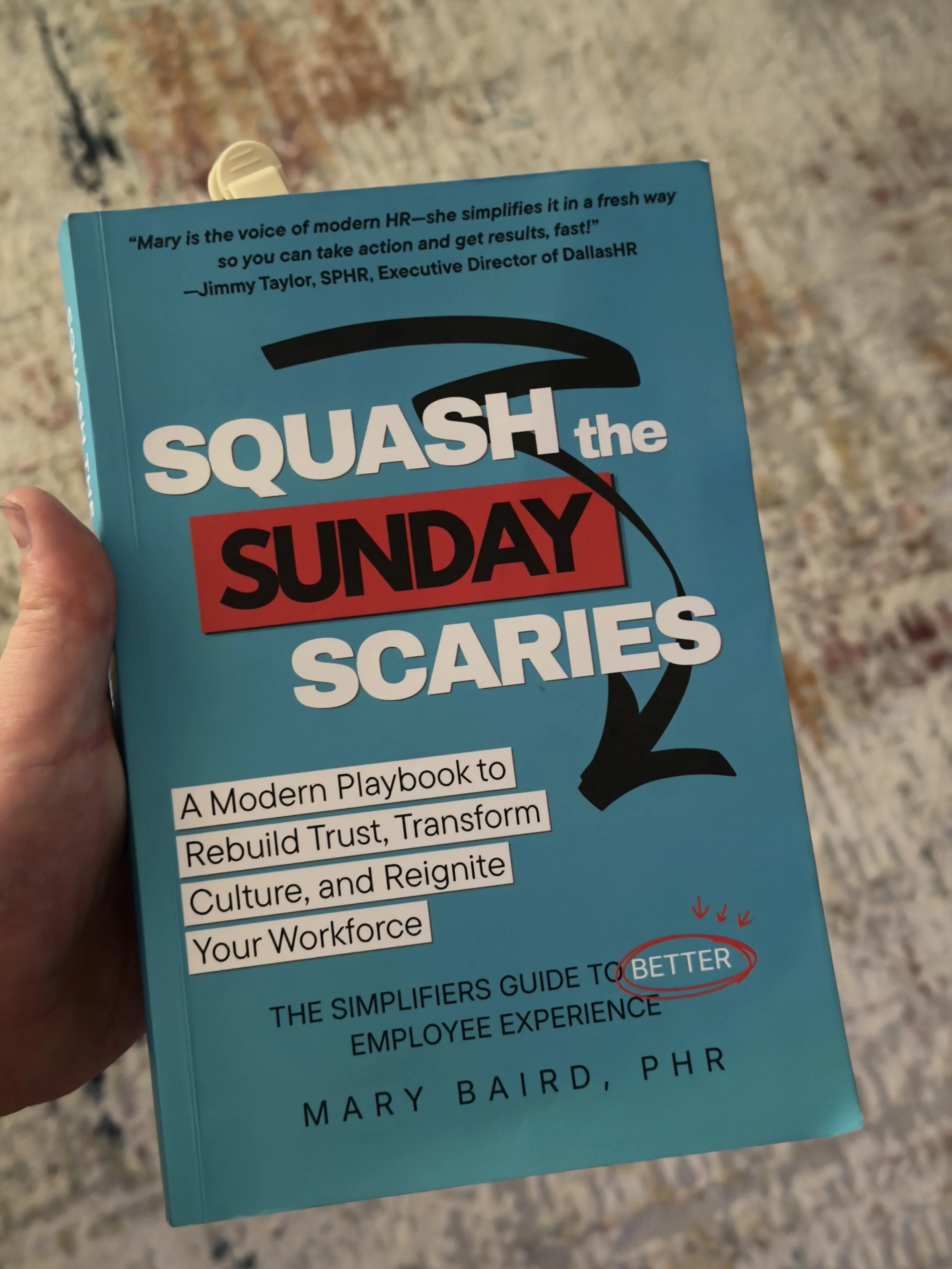
In a book I am reading called Squash the Sunday Scaries by Mary Baird, she makes a case that hits closer to home than I expected. Her argument is not about coffee shops or interior design. It is about the workplace and about what it feels like to walk into a job on a Monday morning and whether that feeling is dread or something closer to purpose. And the more I read, the more I realized she is describing the exact same problem I have been describing this whole post, just from the other side of the bar. Everything we have talked about, the threshold, the light, the layout, the sense of being seen, it all applies to your employees just as much as it applies to your guests. The baristas are walking through a threshold too. They are asking the same unconscious questions every person who walks into a new space asks. Do I belong here? Does anyone see me? Does what I do here matter? And those questions do not disappear just because someone is clocking in instead of ordering a latte. If anything they get louder, because the stakes are higher. A guest who feels unseen can leave and never come back. An employee who feels unseen has to stand there and make the next drink anyway, and that cost shows up everywhere, in the quality of the craft, in the warmth of the greeting, in whether the room feels alive or just operational. Mary Baird calls this the employee experience and the thing she names right at the beginning of the book is something I have not been able to stop thinking about: the better the employee experience, the better the customer experience, and the better the business results. I am not that far into the book but I believe that statement wholeheartedly, because it speaks to something broader than the design of a physical space. It speaks to the space you design for your people, the culture you build around them, and the degree to which they feel that showing up matters and that someone noticed.
A coffee shop where guests feel welcomed but employees feel invisible will not last. You cannot script warmth into a team that has never been shown it. You cannot train belonging into an interaction when the person delivering it has never felt it themselves. The belonging you build for your guests has to begin with the people creating it, and that means the first threshold that needs to get right is not the one your guests walk through. It is the one your team walks through every single morning before a single cup is pulled. The room is only as alive as the people holding it. And that is where Space. The First Frontier. truly begins.
BETTER EMPLOYEE EXPERIENCE =
BETTER CUSTOMER EXPERIENCE =
BETTER BUSINESS RESULTS
Mary Baird , PHR